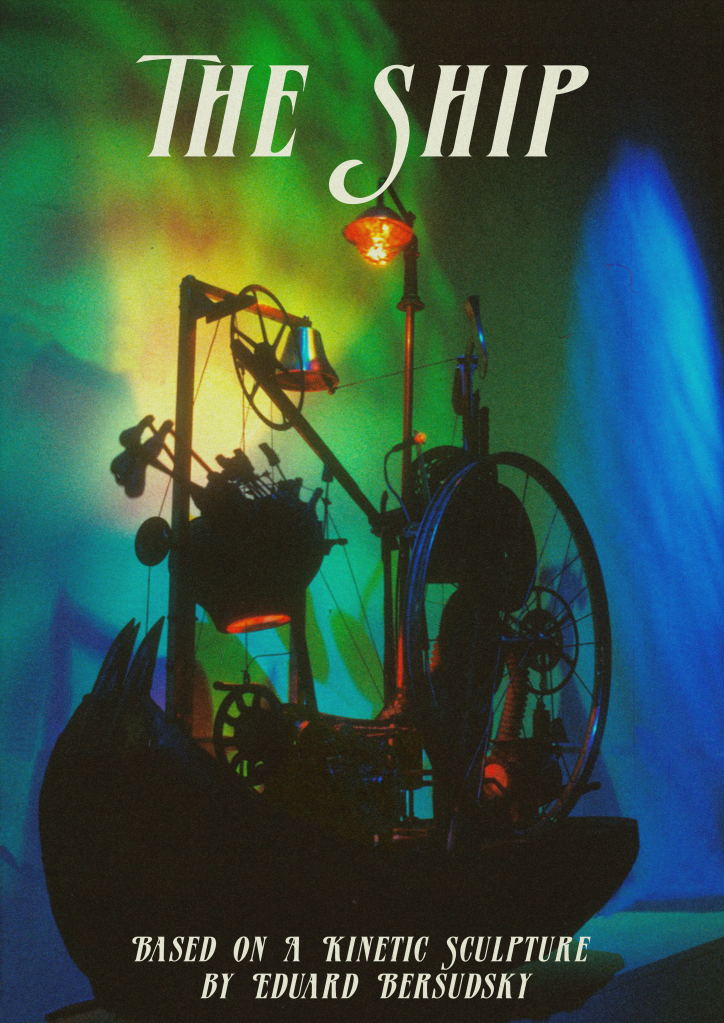
Bersudsky began producing his “kinemats”: kinetic sculptures driven by electrical motors and controlled by sophisticated electro- mechanical devices, incorporating pieces of old furniture, metal scrap and grotesque carved figures.
Sharmanka, https://sharmanka.com/history/
“The Ship”, written by young composer Florence Lingane, is inspired by a sculpture of the same title by Eduard Bersudsky. Bersudsky lived through the Soviet Union, and made many kinetic sculptures inspired by folklore, politics, and his personal experiences. His amalgamation of woodworking with scrap metal resulted in traditionally crafted mechanical toys that didn’t sit flush with themselves, thus showcasing the beauty in the disjointed. Florence emulated this mechanical effect in her composition with strings acting as the rhythmic clockwork parts, brass swelling like the sea the boat sails on, and woodwinds squawking high above the waves. Two bells chime as the boat rocks back and forth. “The Ship” transports you far across the sea to times of political turmoil and the people trying to make life better.
Original programme notes by florence lingane
In 2019, I was in Year 12 and desperate to be the next big composer. Every opportunity I could find, I seized with both hands, and one such opportunity was to travel to Glasgow with a team of a select few young musicians to play in the wind band at the Royal Conservatoire under the supervision of the Young Conservatorium and, specifically, Maestro Stefanie Smith, whom I will thank for the rest of my life.
One activity planned for the group was to visit an art exhibit called “Sharmanka”: the combined efforts of sculpture and theatre in a multi-sensory art experience. I had not seen anything like this before in my life. I was in awe of the art around the room, but it wasn’t until the main clockwork show began that I held my breath. It was astounding; sometimes frightening; sometimes funny; but simply breathtaking. With my eyes wide and jaw on the floor, we continued to the next tourist sight.
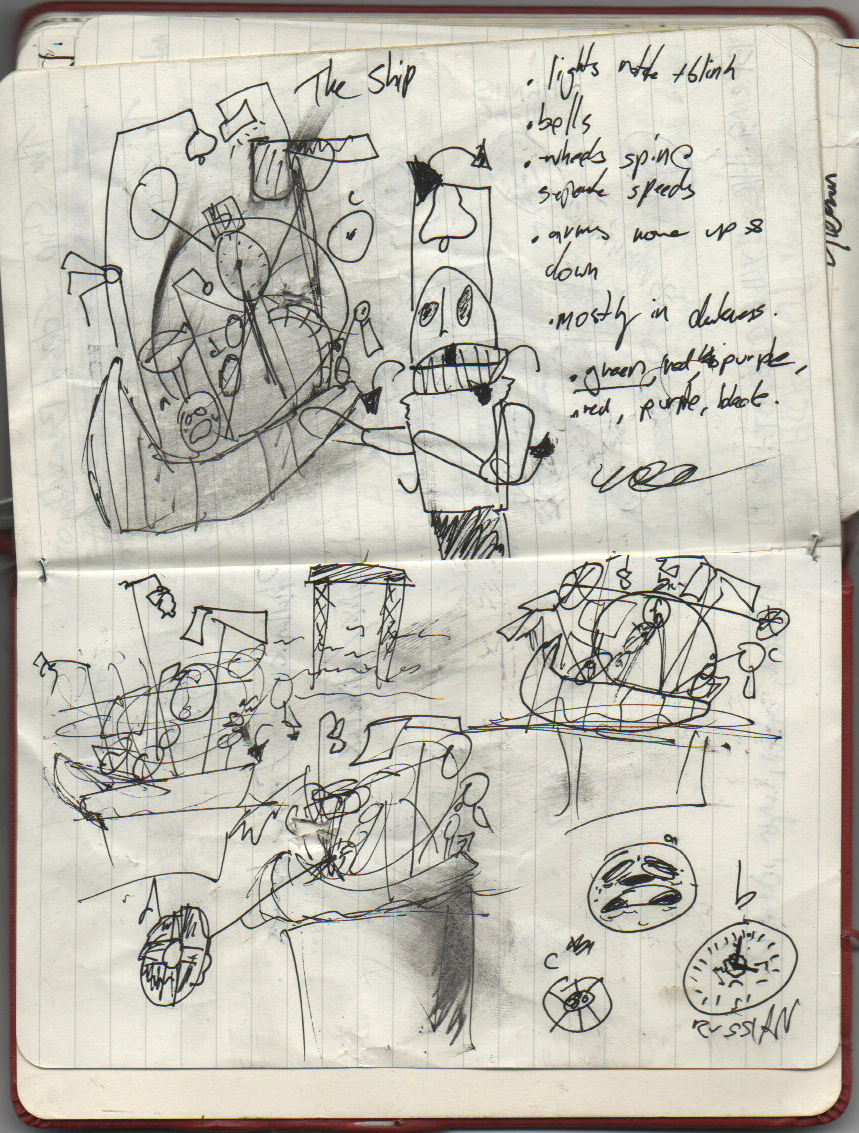
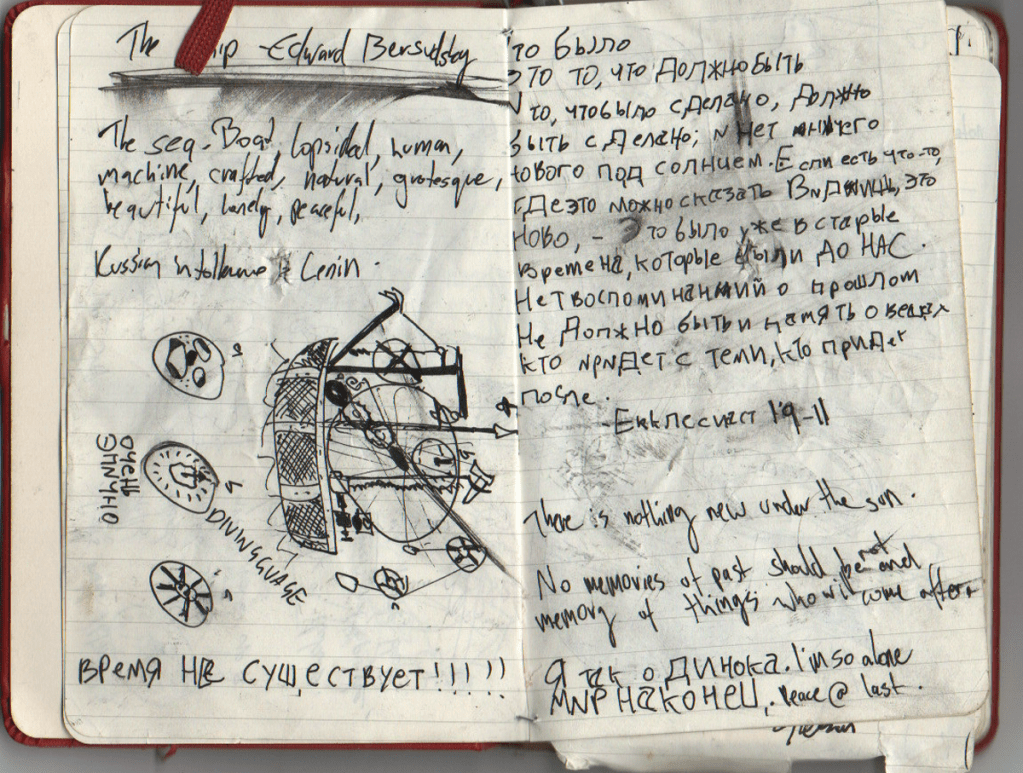
I scribbled and sketched what I had seen in that gallery from memory until I could access the internet to find a clear picture of one sculpture. There was a small boat titled “The Ship” that had no description, unlike the other structures, and it had bells that chimed without a rhythmic framework against each other. That sort of physical sound creation is still a huge part of my composition style.
I wrote most of the piece on the plane journey home working out of my journal pages. The piece incorporated a great deal of what my percussion teacher Angus Wilson was teaching me in relation to polyrhythms and cross rhythms, and so this piece is littered with triplets against quintuplets against dotted semiquavers and so on. The natural disjointedness that I found so beautiful about the art work had to be represented to the best of my ability. I experimented with writing directions like “ring bell whenever you want”, but ultimately settled instead on notating each complex bar of seemingly random chimes.
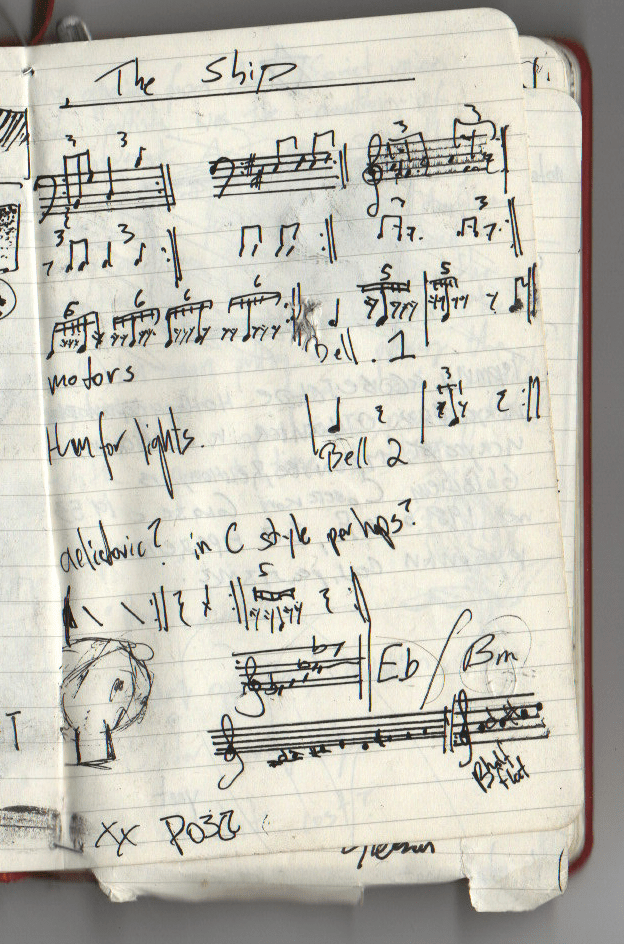
To represent the open sea, I refrained from using either major or minor tonalities in favour of suspended and pentatonic sounds that made the piece sound vast and open. Once the second half of the piece begins, I start incorporating modal writing and klezmer inspired music to evoke struggle and oppression, in contrast to the open sea. One particular orchestrating moment in the piece that still excites me is the bass clarinet and bassoon duet in the beginning of the piece. The super rich melody sounded so natural and flowing; although, it is so deep and murky.
On 8 September, the piece was debuted with the chamber ensemble Consorte Eclettica, conducted by Maestro Stefanie Smith herself, with myself playing the synth part live. Having my piece amongst works like Stravinsky’s Eight Instrumental Miniatures, Ives’ The Unanswered Question, Façade by Wiliam Walton, and another local composer Jack Lundie-Jenkins was incredibly humbling and inspiring. Music seemed less inaccessible in this moment. I could be next to these people because they’re just people too.
Following this show, some schools came together for a composition opportunity with the QSO to introduce kids to the process. I was foaming at the mouth thinking about getting a piece together that would showcase me as an aspiring composer who should be taken seriously. “The Ship” had just been played and, with only a little modification, it would be the perfect piece for this reading.
The orchestrated version was complete with the main difference being replacing the swelling synth pad with the full sound of the French horn. The QSO played my piece and then practiced in the break, where I had the chance to talk to the performers, who offered notation and instrumental feedback. Once they performed the final performance, applause came from everyone, and then, it was revealed that there was an award to be awarded without my knowledge! I was just happy that the piece was played, the performers liked it, and that people clapped, and so I tried not to imagine winning, but they said MY name. I didn’t believe that it had happened — that my hard work paid off.
I had won the QSO COMPOSE competition unwittingly!!
Following this amazing experience, the QSO recorded my piece professionally while I liaised through the wonderful Judy Wood.
Now, in 2024, listening back to this first big piece of mine, I can hear the seeds of my future pieces shine through as well as my teenage self. I am a very different person now, transition included, and I don’t believe I could write this piece again. My hopes and dreams have changed. I am less competitive and more relaxed, but this piece lives on as an important milestone in my journey with music.
I dedicate this piece to Stefanie Smith for believing in me and seeing something in my music that I didn’t understand yet, although I may never understand it truly.
 Florence Lingane